

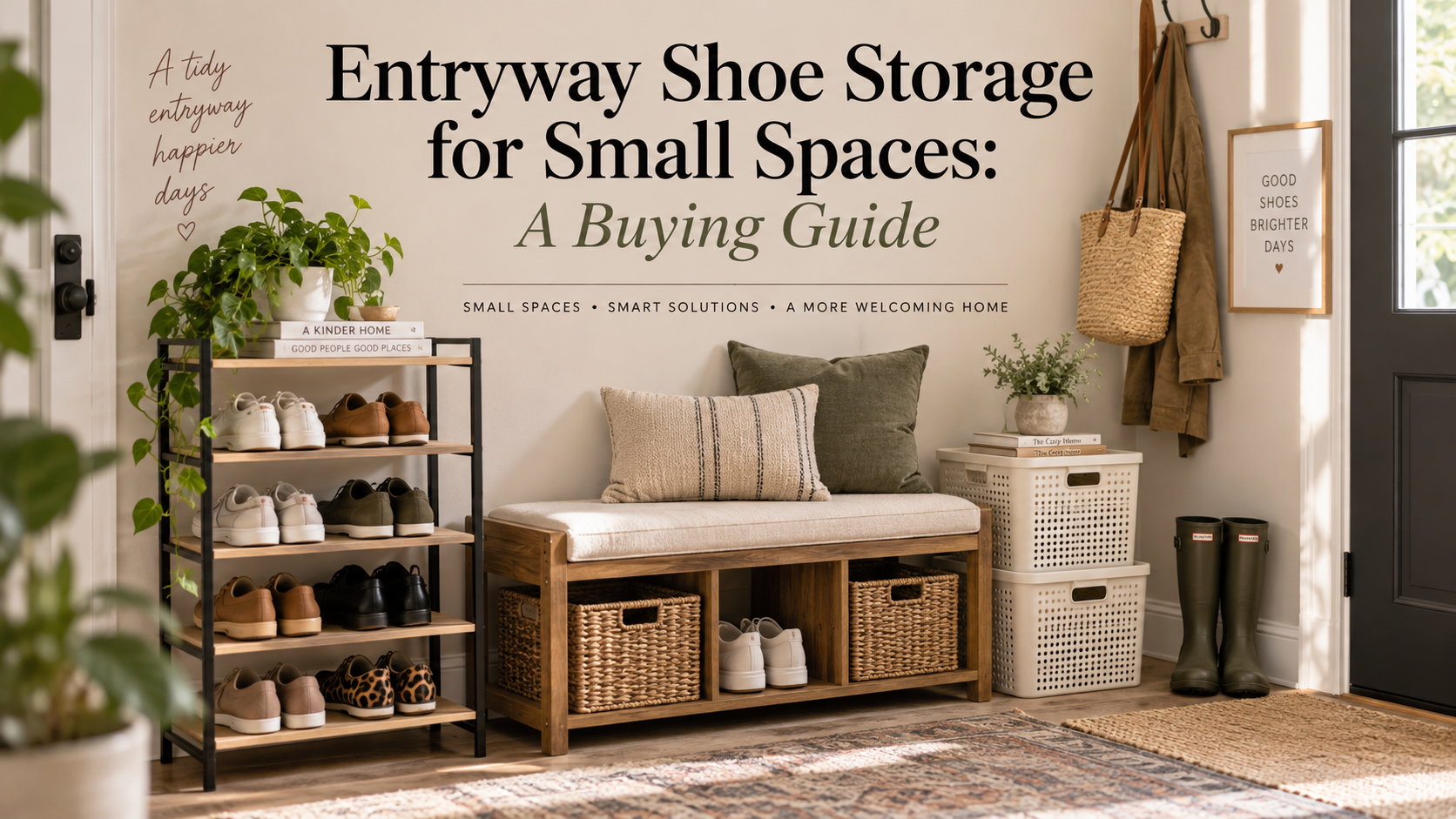
When planning entryway shoe storage for small spaces, start with the space you actually walk through and the shoes you wear most often. The best small entryway shoe storage should make daily routines easier without crowding the doorway.
A slim cabinet can hide everyday pairs along a shallow wall, while an open rack keeps them easy to grab. A bench earns its space when you also need somewhere to sit.
The awkward purchase is the one that technically fits against the wall but gets in the way every time the door opens. Before choosing a finish or counting shelves, work out where shoes naturally land, how much room you can spare, and whether the storage will still feel easy to use on an ordinary busy morning.
Choose a storage format for your entrance
| Your main need | Format to consider | Check first |
|---|---|---|
| Hide shoes along a shallow wall | Slim shoe cabinet | Door opening and shoe fit |
| Grab daily pairs quickly | Low open rack | Shelf depth and shoe overhang |
| Sit while putting shoes on | Shoe storage bench | Seat rating and room in front |
| Keep a few casual pairs together | Open basket | Usable base size and easy access |
| Use a nearby closet door | Over-the-door organizer | Door clearance and pocket size |
| Give wet shoes a landing spot | Boot tray | Inside dimensions and care |
Before you choose a piece
Set aside the pairs that need to live by this door. An entryway does not have to hold every shoe in the home. If you have another cupboard or closet, move occasional pairs there before deciding how much capacity to buy.
If a spare basket or shelf might solve the problem, try entryway shoe storage using what you already own before adding another piece of furniture.
Check the full footprint, including handles and any shoes that extend beyond a shelf. Open the entrance door, nearby closet doors, and the proposed storage compartment. You still need room to walk past and reach the shoes comfortably.
If you have found a promising wall but have not checked the opening space, measure your entryway for shoe storage before comparing listings.
Slim shoe cabinets
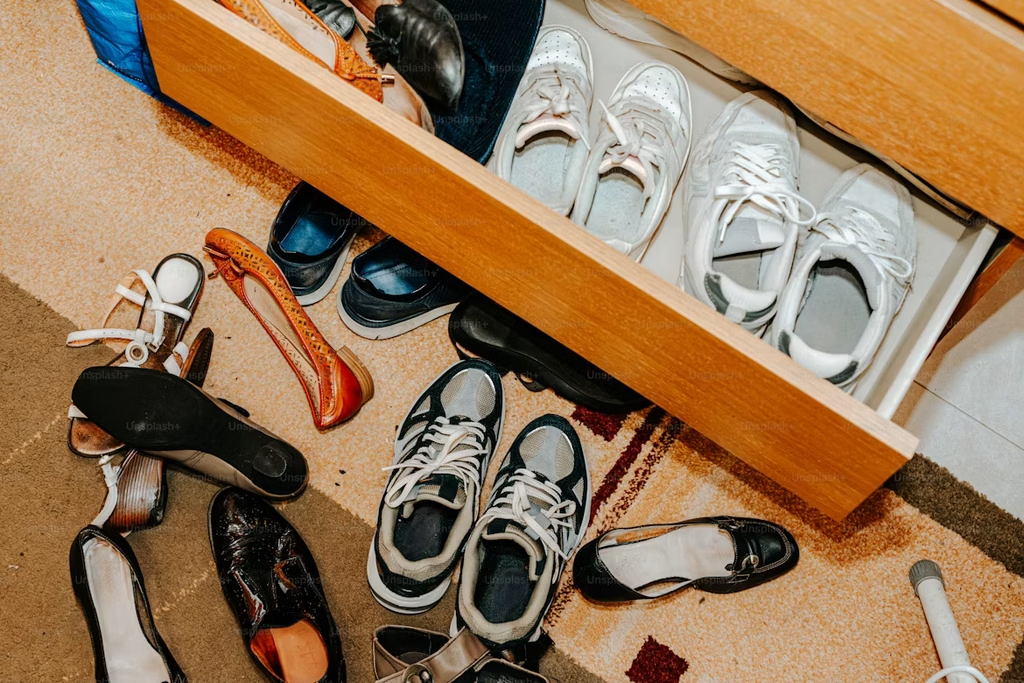
A shallow cabinet is worth considering when visible shoes make an entrance feel busy and you have a suitable wall for it. Tilt-out compartments can keep pairs behind a neat front, although the way a shoe sits inside matters as much as the exterior measurements.
What works
- Closed fronts keep the storage visually simple. A cabinet that fits the wall can give everyday shoes a defined place without introducing an open row of different colors and shapes.
What to know
- Check internal compartment measurements, the largest shoes you plan to store, and the clearance needed to open the unit. Read the installation requirements before ordering; a slim profile does not mean a cabinet can stand safely without the fixing specified by its manufacturer.
Skip this format if your shoes cannot fit inside comfortably or the required installation is not possible in your home.
Once you know a closed unit fits the space, compare slim shoe cabinets for narrow entryways for the cabinet-specific details.
Low open shoe racks
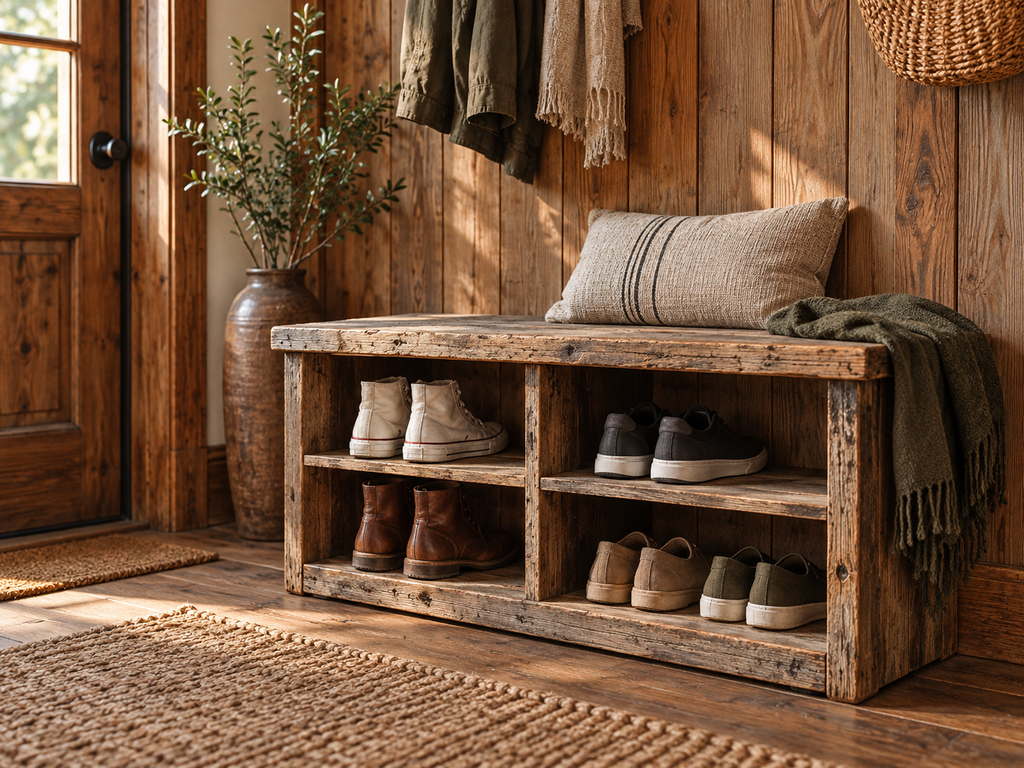
An open rack suits an entrance where getting shoes on and off quickly matters. You can see each pair without opening a compartment, and it is easy to notice when the rack is becoming crowded.
What works
- A low rack keeps the daily selection accessible. Choose the shelf arrangement around your footwear: flats, chunky sneakers, and boots may need different amounts of vertical space.
What to know
- Check usable shelf depth rather than relying on the advertised pair count. Shoes can project beyond the frame, and thin heels may not sit well on widely spaced bars. Look at the actual shelf surface and the care instructions.
Skip this format if seeing the shoes is the main thing you want to change. An open rack organizes the view; it does not hide it.
Shoe storage benches
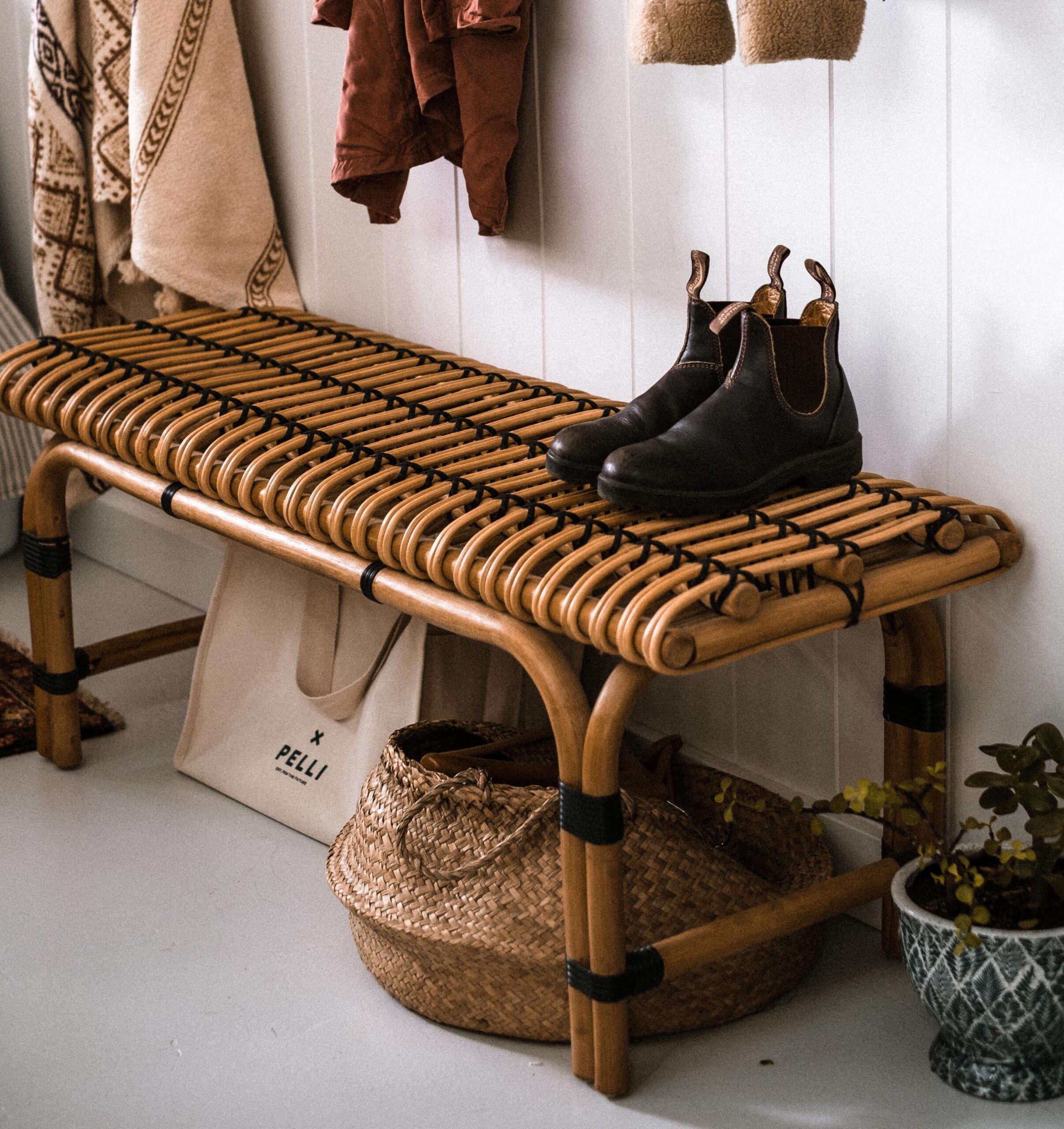
A bench makes sense when the entrance needs both shoe storage and a place to sit. An open shelf underneath keeps pairs visible; cubbies give them separate spaces but can be less flexible for larger footwear.
What works
- Combining a seat and storage may let one piece do the job of two. It is a useful direction when putting on lace-up shoes is part of the daily routine.
What to know
- Check the stated seating capacity, seat height and space for your legs in front. A unit sold only as a shelf should not be treated as seating. For cushioned models, consider how the cover is cleaned. If sitting down is part of the requirement, compare shoe storage benches for small entryways rather than choosing by storage capacity alone.
Open baskets for a few everyday pairs
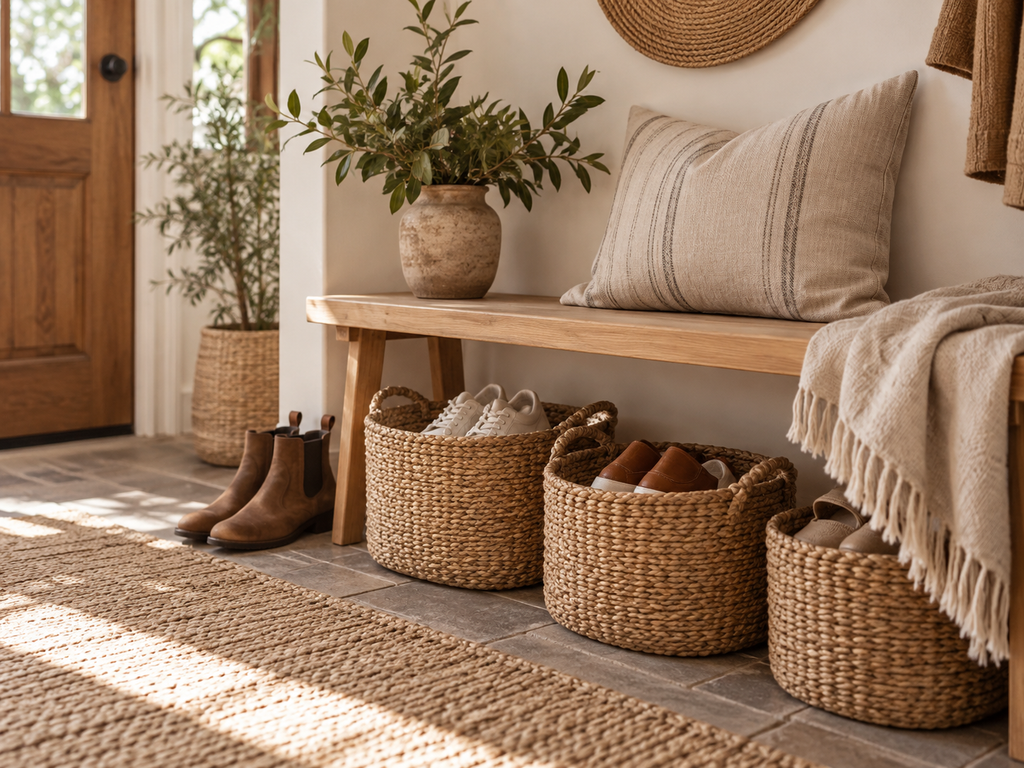
A basket can make sense for a small collection of casual shoes, especially when there is already room under a console. Choose one that lets you see and reach the pairs you use, rather than a deep container that turns them into a pile.
What works
- The shape and texture can sit comfortably alongside the rest of your decor. Handles may make it easier to move the basket for cleaning, provided the basket is designed for the load you put in it.
What to know
- Measure the inside of the base. A tapered basket can have a roomy-looking opening and much less space underneath. Check the lining, any rough edges, and the care guidance. For damp or muddy footwear, choose a purpose-made landing surface instead of assuming a decorative basket can handle moisture.
Skip this format for a large collection, shoes that need to stay separated, or a household where finding a pair already involves rummaging.
Over-the-door organizers
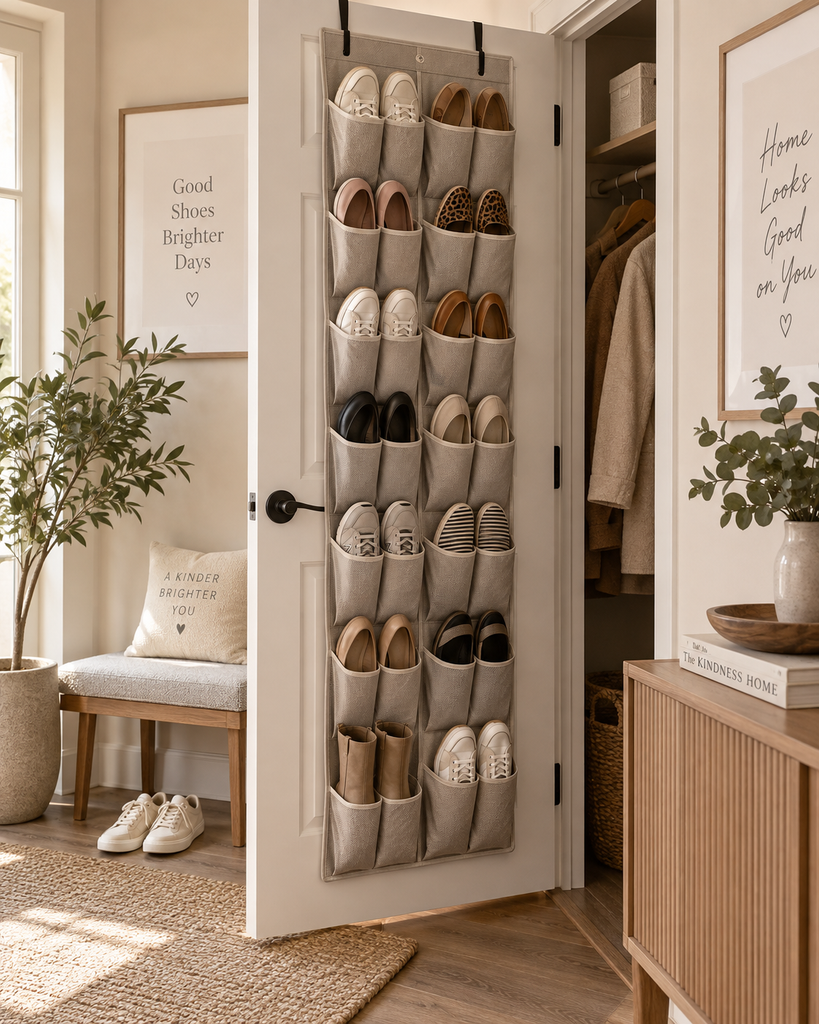
A nearby closet door may offer storage when there is little usable wall or floor space. Pocket organizers and hanging racks work differently, so start with the pairs you need to fit and how often that door is opened.
What works
- This format uses a door surface instead of adding a separate piece of floor furniture. Keeping shoes inside a nearby closet can also leave the entrance itself visually quieter.
What to know
- Check the door thickness, clearance at the frame, hook design and manufacturer load limit. Test whether the door can open and close normally in the proposed setup. Pocket dimensions matter, especially for larger sneakers or boots. Do not assume a hanging design is suitable for every rental or every door.
Skip it if the organizer interferes with the door, makes frequently used shoes awkward to reach or does not fit the footwear you actually own.
Boot trays for the pairs that come in wet
A tray gives a small number of wet or dirty pairs a defined place near the entrance. It is a landing area rather than a solution for a large shoe collection, and it may work alongside the main storage you choose.
What works
- A purpose-made tray can keep the daily shoe area contained. Look for a shape that fits the intended spot and a surface you can clean according to the manufacturer’s instructions.
What to know
- Check the usable space inside the rim and allow for the actual footprint of boots. Keep the tray out of the walking route, empty collected water and follow the care guidance for both the tray and the floor beneath it.
Skip this as your only storage if the real problem is too many dry pairs with nowhere to go. A larger tray can become a larger pile.
Choose for the routine as well as the room
Picture arriving with a bag in one hand. Is the storage within reach of where you naturally take off your shoes? Does putting a pair away require moving other things first? A layout can look tidy in a photo and still ask too much of the people using it.
If shoes keep landing beside storage you already have, work out why shoes pile up by the front door before buying a larger unit.
If the furniture fits but the daily landing spot is unclear, create a daily shoe drop zone around the route you already use.
Decide whether the shoes need to be hidden
Closed storage can be a good fit when this is the first view into your home, and you want a simpler backdrop. Open storage makes the contents easy to see and put away. Neither choice fixes a unit that is too small, too far from the door, or difficult to access.
If the footprint works either way and the remaining choice is visibility versus access, weigh open versus closed shoe storage against your daily routine.
Set the budget around the job
Decide which feature you are paying for: a seat, hidden storage, a shallow footprint or a simple place for a few daily pairs. Include delivery, assembly, and any required installation in the total. A lower item price is less useful if the piece cannot do the job you need.
If you are still deciding which features justify the spend, work through how much to spend on entryway shoe storage before narrowing the shortlist.
If your item budget is already capped at $50, narrow the comparison to entryway shoe storage under $50 and check delivery costs separately.
Read product details and reviews for your own situation
Start with the exact model’s dimensions, materials, and installation instructions. Then use buyer reviews to investigate practical questions: do larger shoes fit, are the doors easy to use, and do comments repeatedly mention missing parts or assembly difficulties?
Check which size or variant a review describes. A comment about a wider model may not help with the narrow one in your cart. Treat isolated experiences as clues to investigate, and look for enough detail to understand the circumstances. A high average rating cannot tell you whether a unit fits your doorway.
The choice to make first
Choose the format that resolves your main constraint. Start with a shallow cabinet when you need concealed storage along a suitable wall, an open rack when quick access matters, or a bench when a seat is part of the job. Use a basket, door organizer, or tray where that smaller role genuinely fits the space.
Then compare specific products within that format. Keep your measurements and daily shoe list beside you while shopping. The useful choice is the one that leaves room to move and makes the next pair easy to put away.
5 thoughts on “Entryway Shoe Storage for Small Spaces: A Buying Guide”
Comments are closed.