
Four steps, and none of them require buying anything today.

What you need
- A tray, basket, or mat you probably already own
- Two minutes to count how many pairs actually get worn in a normal week
- One household conversation about where shoes actually land
| 1 | Set a hard limit before you choose anythingPick a number, not a size. Four pairs, six pairs, whatever fits the number of people who use the door daily plus one. This number matters more than the container — it is the difference between a drop zone and a shoe collection that happens to be by the door. Everything past that number is not a daily-zone problem anymore. It is a separate-storage problem, and it gets solved separately, not by finding a bigger container for the same spot. |
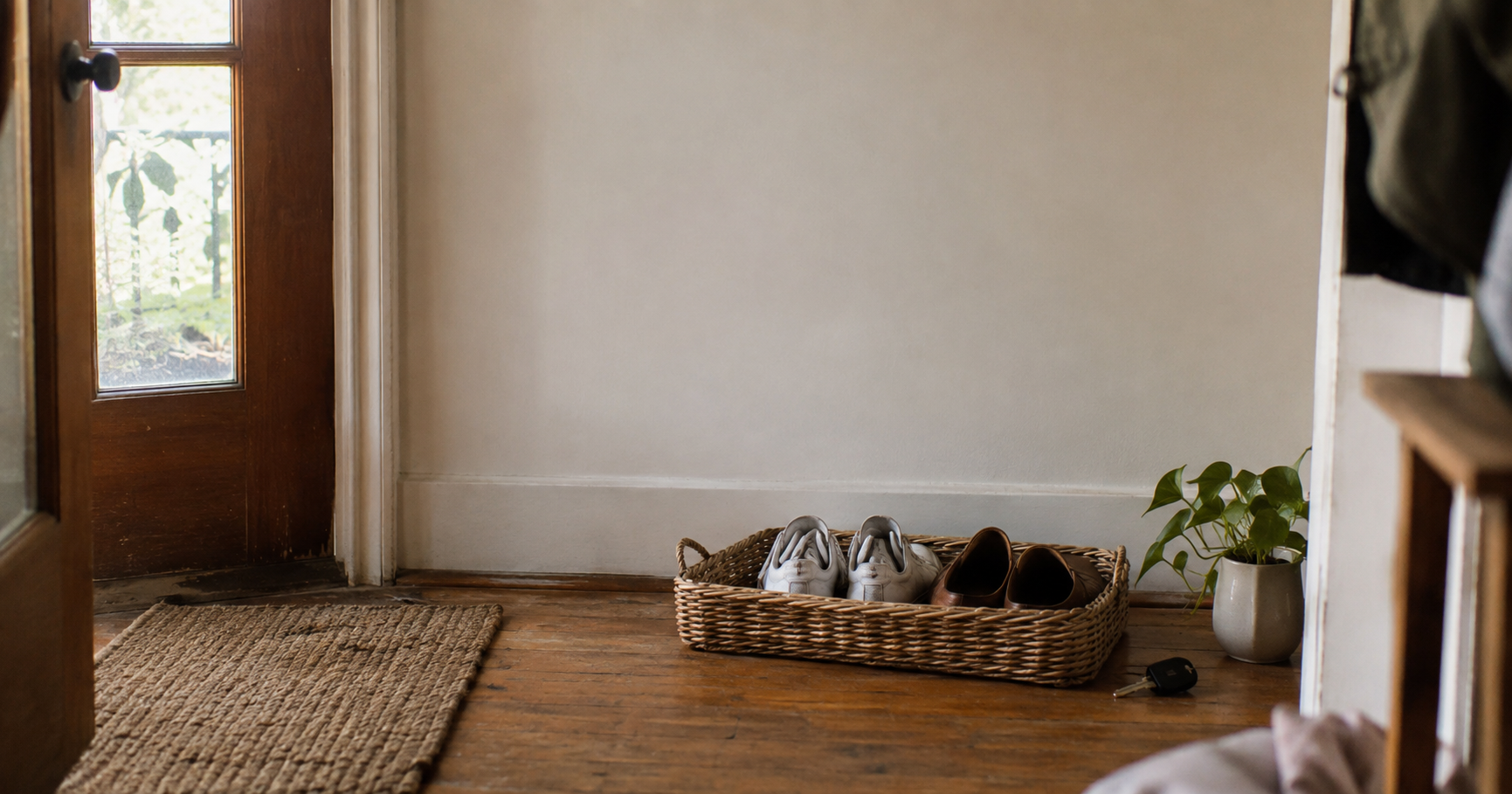
| 2 | Put something there today, even if it is temporary Use whatever already fits the spot you have — a tray, an empty basket, even a folded towel for a week. The exact piece of furniture can come later, once you know the limit actually holds. Buying the right container before testing the limit is how a lot of shoe storage ends up unused within a month. |
| 3 | Give the rest of the shoes somewhere else to goOff-season boots, the shoes worn twice a year, the ones someone is not ready to donate yet — none of those belong in the daily zone, even if there is technically room. Route them to a closet, an under-bed box, anywhere that is not the first thing visitors see. The daily zone only stays a daily zone if it never becomes the overflow spot too. |
| 4 | Reset it once a weekHabits drift. A pair that was worn constantly in June sits untouched by September, and something else has quietly taken its spot at the door. Once a week, pull anything that has not moved and ask whether it still belongs in the four, six, or however many pairs you set. This takes under a minute and it is the step that actually makes the limit stick long-term. |
A tray or a towel is a fine permanent answer if it is working for your household. If you are ready for something more built-in, that is a separate decision from the habit itself – solve the routine first, then shop for it.
When you get to that point, entryway shoe storage for small spaces compares the actual formats worth considering.